Investment Opportunity: Launching a High-Value Vanilla Enterprise in Vanuatu
Capital Required: USD $150,000
Vanilla is one of the world’s most valuable agricultural commodities — often referred to as “green gold” because of its exceptional global demand and premium pricing. With international markets consistently paying hundreds of dollars per kilogram for high-quality cured vanilla, the crop has become an attractive option for investors seeking long-term, high-margin agricultural returns.
Vanuatu stands out as one of the Pacific’s most respected vanilla-producing nations. Its volcanic soils, favourable climate, and skilled agricultural communities create an ideal environment for producing superior-quality beans that command premium prices in export markets. For investors, this combination creates a rare opportunity: turning a relatively small agricultural footprint into a scalable, high-value international business.
🌱 Why Vanilla? Why Vanuatu?
Vanuatu offers natural and commercial advantages that very few regions can match:
-
Exceptional growing conditions for vanilla orchids — stable humidity, shade-friendly forest systems, and mineral-rich soil.
-
A skilled local labour force already familiar with vanilla pollination, training, and post-harvest curing.
-
A supportive agricultural environment, with government and community initiatives helping expand export capacity and quality control.
-
A premium global reputation, especially among buyers seeking authentic, ethically sourced Pacific vanilla.
For investors, this means predictable production potential, competitive operating costs, and access to premium markets where Vanuatu vanilla already has a name.
🌿 Land, Scale & Productivity
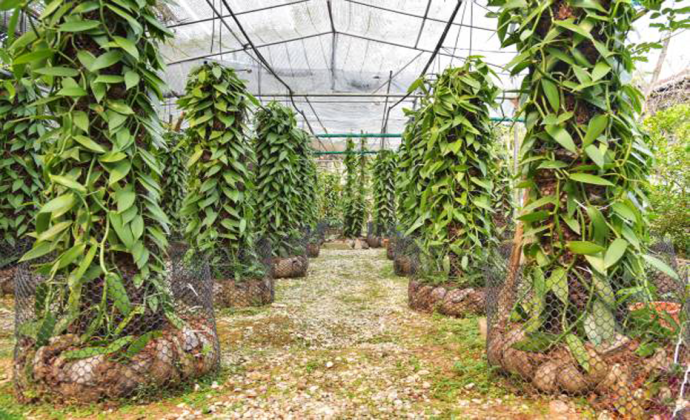
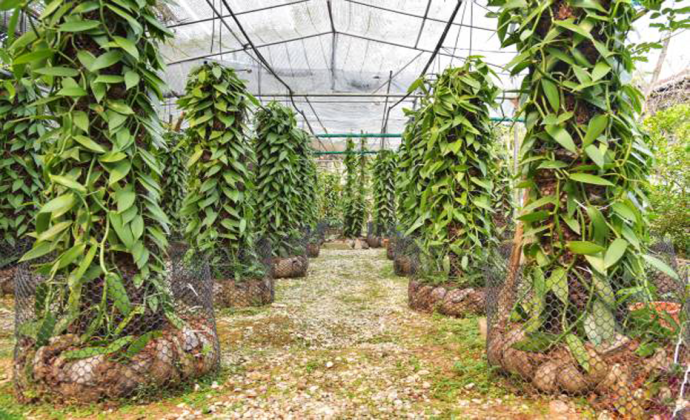
Vanilla is grown as a trained climbing orchid, using support posts or live tutor trees. Standard density is around 1,000 vines per acre, and yields rise significantly as the farm matures.
Years 1–2: Establishment phase — vine growth and preparation.
A well-managed acre of mature vanilla can produce 120–240 kg of cured beans annually. This means even a small, carefully structured plantation can become a profitable agricultural asset when quality and curing standards are maintained.
💵 Startup Investment Requirements
To establish a high-quality vanilla farm in Vanuatu — including shade-house infrastructure, irrigation, vines, curing equipment, and compliance systems — an estimated USD $150,000 is required for a multi-acre commercial-scale operation.
Startup components include:
-
Planting material (cuttings): 5,000+ high-grade vines
-
Support systems: tutor posts, trellising, shade, and windbreaks
-
Land preparation: clearing, contouring, mulching, and organic amendments
-
Irrigation systems: pumps, tanks, filtration, and drip lines
-
Curing infrastructure: sweating boxes, drying racks, solar dryers, airtight storage
-
Training & certification: field skills, quality control, and traceability compliance
-
Tools & operational equipment
This investment establishes a fully operational, export-ready vanilla enterprise built on proven agricultural methods.
🔄 Operating Costs & Annual Expenses
Vanilla farming is labour-intensive, particularly during flowering and curing. Annual costs typically include:
-
Skilled labour for pollination, pruning, vine training, and harvesting
-
Organic amendments and replanting
-
Curing, grading, and packaging
-
Utilities & irrigation maintenance
-
Compliance and administration
Average annual costs for a multi-acre system are USD $10,000–$18,000, depending on scale and labour strategy.
📈 Revenue & Profit Potential
Profitability depends on two core variables:
-
Yield per acre
-
Market price per kilogram
Mature Production Range: 120–240 kg per acre of high-quality cured vanilla
Market Price Range: $75–$150/kg for commercial grade
Revenue Scenarios (per acre):
| Price Level | Annual Revenue |
|---|
| Low-grade export | USD $9,000–$18,000 |
| Standard export grade | USD $18,000–$36,000 |
Premium grade
| USD $36,000–$72,000 |
Premium curing = premium pricing.
High-quality beans deliver exceptional profitability after Year 3.
Export Markets.
Australia, New Zealand, USA
Vanilla farming is a highly sought-after agricultural practice, especially in tropical regions where vanilla orchids thrive. Known for its unique and aromatic qualities, vanilla has become an invaluable commodity, often described as “black gold” due to its high market value. This article dives into the fundamentals of vanilla farming, from plant selection and cultivation to harvest and market insights.
1. Understanding Vanilla Farming
Vanilla is primarily grown from the Vanilla planifolia species, though other species like Vanilla tahitensis also produce valuable beans. Native to tropical regions, vanilla farming requires specific conditions: a hot and humid climate, adequate shade, and rich, well-drained soil. Because of its exacting requirements, successful vanilla cultivation depends on selecting the right location and carefully maintaining the plants throughout their growth cycle.
2. Site Preparation and Soil Requirements
To establish a productive vanilla farm, the site must be chosen and prepared with care:
- Climate: Vanilla thrives in temperatures between 21°C to 32°C (70°F to 90°F), with a preference for high humidity (80% or higher).
- Soil: Rich, loamy soil with good drainage is essential. Adding organic matter, such as compost, enriches the soil and boosts plant health.
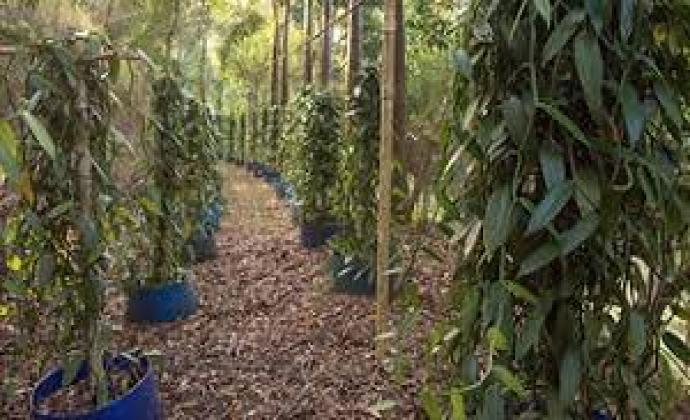
- Shade: Vanilla orchids grow best under partial shade. Natural shade from larger trees is ideal, as it mimics their natural environment in tropical forests.
3. Selecting Vanilla Plants
Choosing healthy and vigorous vanilla vines is crucial for a successful farm. The cuttings should be mature, about 60 to 100 cm in length, and free from any signs of disease or pests.
4. Planting and Support System
Vanilla vines are planted near support trees or poles that provide both vertical support and shade. The plants are carefully tied to these structures to help them climb, as the vines need to grow vertically to maximize their potential yield. Spacing is key; each vine should have enough room to develop without being overcrowded, typically around 2-3 meters apart.
5. Pollination Process
Vanilla orchids are unique in that they require hand-pollination. In the absence of natural pollinators outside their native regions, farmers must manually pollinate each flower. This process involves transferring pollen from the male part of the flower (anther) to the female part (stigma). The window for successful pollination is short—each flower remains open for just 24 hours, requiring skilled and timely intervention.
6. Pruning and Maintenance
Regular pruning ensures that vanilla vines don’t become too dense, which can lead to disease. Removing dead or overgrown sections promotes air circulation, reducing the risk of fungal infections. Additionally, farmers often apply organic fertilizers and compost to support the growth of the vines.
7. Harvesting and Processing
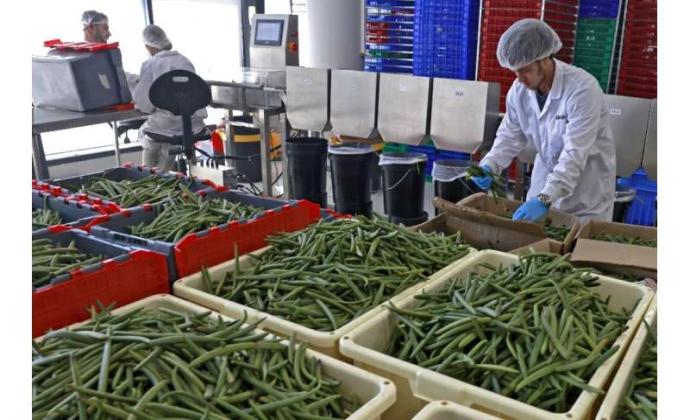
Vanilla pods are harvested when they begin to turn slightly yellow at the tips, typically after 8-9 months of growth. Timing is essential, as immature pods produce less aroma, while overripe pods lose flavor. Once harvested, the pods undergo a complex curing process, involving sun drying, sweating, and conditioning to develop the characteristic vanilla flavor. This curing can take several months and requires close monitoring.
8. Challenges in Vanilla Farming
Despite the potential for high profits, vanilla farming presents numerous challenges:
- Labor-Intensive: The manual pollination process and careful monitoring make it labor-intensive.
- Climate Sensitivity: Vanilla plants are susceptible to extreme weather, which can affect yield.
- Pest and Disease Management: Vanilla vines are vulnerable to pests and diseases, which require consistent care and preventive measures.
9. Market Opportunities
The demand for natural vanilla is on the rise, especially as consumers increasingly favor natural ingredients over synthetic flavors. Establishing a farm with high-quality cultivation and processing practices can attract premium buyers in industries such as food, beverages, and cosmetics.
10. Sustainability in Vanilla Farming
Sustainable practices, such as using organic fertilizers, maintaining biodiversity, and supporting local communities, contribute to the resilience of vanilla farms and the quality of the final product. Many farmers are adopting these practices to not only meet consumer demand but also protect the environment.